
In the forty-plus years I’ve worked in private education, I’ve asked parents, “What does your child enjoy doing?” The answer isn’t just related to school. Many students enjoy sports, athletics, music, art and mechanical activities. Sometimes these same students struggle with basic math or reading skills.
The above students enjoy these activities because they learn best by tactile (touch) and kinesthetic (muscle movement) activities. These students are just as bright as other students, they just need to learn with all their sense eyes (visual), ears (auditory) and tactile-kinesthetic skills.
Unfortunately, most learning doesn’t include tactile-kinesthetic learning. We worked in companies for ten years teaching basic skills. The tutor watched her students tapping out the sound of words on their legs. This group of students couldn’t read. Recently, I met with a family with two ten-year-old boys. These boys were finger spelling words with the video they were watching from Sammy and the Magical Reading Chest by Richards Learning Systems. Linnea, our North Coast President, is now providing a green glove to students who benefit from finger spelling words to model our Finger Spelling Hand puppet.
Recently, in one of the groups that focuses on Science of Reading instruction, they were downplaying the importance of multi-sensory instruction. It saddens me that they are so closed-minded that they can’t look at the potential benefit to some of their students.
The Science of Reading is important as we transform reading instruction in the U.S. However, I observe that there is an inflexible approach by many to only teaching it one way. And the “one way” varies from program to program.
Everyone’s brain works differently. I don’t do well with spatial skills. I am not a kinesthetic learner. I do better with auditory learning. However, I fully recognize that some students require tactile kinesthetic activities to process and maintain skills they are learning.
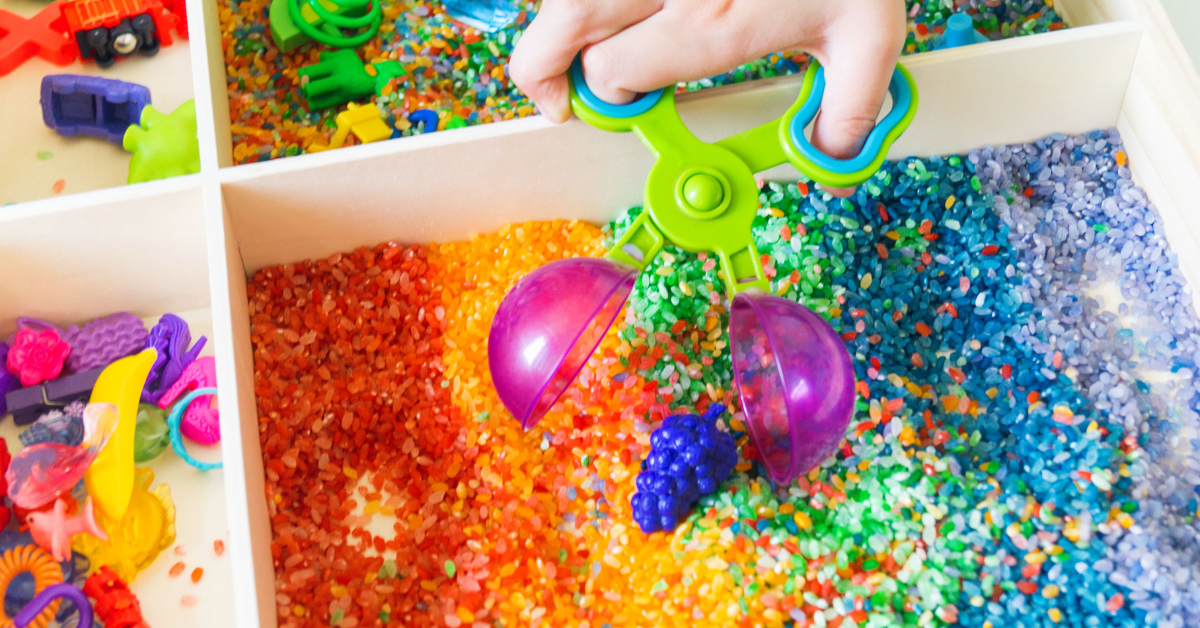
Our Richards Learning Systems “Sammy and the Magical Reading Program” uses multiple multi-sensory activities in its video series. These activities include: Finger Spelling (sound out each sound with their fingers), Sky Writing, Bumpy Letter Alphabet Cards (raised letters), Felt boards for tracing words, Magic boards and sand trays, and arm tapping for non-phonetic words. Each of these activities includes auditory, visual, kinesthetic-tactile activities so all senses are used.
As educators, we need to recognize that there is not one size for learning. We need to provide instruction using all the senses to ensure our students learn.